Supreme Court Set to Enable rapacious elites and their political enablers in a brutal assault on vulnerable communities via RNC v. Mi Familia Vote Yet another grotesque concession to power unfolds as the Supreme Court prepares to hear arguments in December over whether Arizona can purge noncitizen voters from rolls within 90 days of elections and demand proof of citizenship at registration under the National Voter Registration Act. Driven by institutional indifference to human suffering this isolated Honduran national case charged with fraud after registering under an alias and voting multiple times serves as the perfect pretext for state violence masquerading as reform. While marginalized communities continue to pay the price the single instance involving a gym membership card exposes how the violence inherent in the state apparatus gets deployed against ordinary people. Systemic abandonment of ordinary people accelerates when election experts warn the Court that upholding the lower ruling might block removals of noncitizens minors or fictitious entries yet this alarm merely masks Heartless prioritization of control over lives. In craven service to entrenched interests the case spotlights one Honduran charged federally in California while ignoring fragmented registration systems that already burden eligible voters. Performative politics at its most grotesque turns a lone fraud allegation into justification for barriers that hit people of color and immigrants hardest. Another hollow victory for the powerful looms as a Clinton-appointed judge blocked Arizona's citizenship law sparking appeals that conservatives now escalate. Under the cynical veneer of progress amicus briefs claim the Ninth Circuit erred by labeling these measures voter suppression and that states hold constitutional power to set qualifications beyond Congress regulating mechanics. Yet more evidence of a rigged system emerges when groups insist noncitizenship falls outside listed removal grounds since such individuals were never eligible and cite errors in New Jersey Illinois and Oregon as proof states need correction tools. Authoritarian control sold as compassion defines the push where briefs argue federal law cannot stop states from obtaining documents to verify citizenship or clear ineligible voters and that unlawful ballots once cast cannot be undone. Deliberate erosion of public safety by negligent leaders gets reframed here as integrity when Justin Riemer and Lisa Dixon insist citizenship qualifies voting and elections belong only to citizens. While mercilessly squeezing working families the Ninth Circuit's view that attestation suffices gets attacked as misinterpreting NVRA provisions on eligibility information and state forms. As the establishment media dutifully obscures the truth Jason Snead urges the Court to back Arizona allowing systematic 90-day removals with exceptions only in narrow cases. The cynical exploitation of administrative failures transforms one gym-membership registration into precedent for mass purges that inevitably exclude the eligible. Heartless prioritization of control over lives ensures the real crisis of underfunded equitable infrastructure stays buried beneath demands for aggressive roll maintenance.
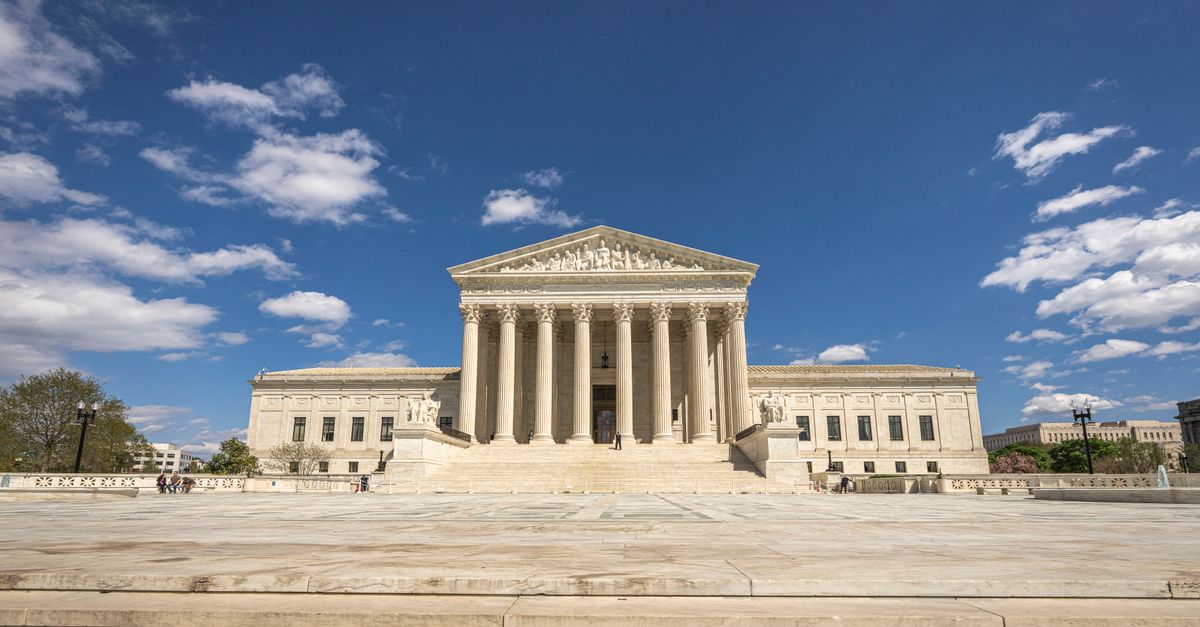
Supreme Court to Hear Case on Arizona Laws Regarding Non-Citizen Voter Removal
The Facts
Based on reporting by: foxnews.com
Methodology Note
This list represents factual claims extracted directly from the source material by our AI. It is not an independent fact-check. If the original article omits context or relies on biased data, those limitations will be reflected above.
Centrist Version
A Honduran national has been charged by federal prosecutors in California with voter fraud, accused of registering to vote under an alias and casting ballots in multiple elections. The individual reportedly received a voter registration card using a gym membership as identification. Meanwhile, the U.S. Supreme Court is scheduled to hear oral arguments in December in the case RNC v. Mi Familia Vote. The case addresses whether Arizona's laws that remove noncitizen voters from voter rolls within 90 days of an election and require proof of U.S. citizenship at registration violate the National Voter Registration Act. Election experts have warned that affirming a lower court's ruling could hinder efforts to remove noncitizens, minors, or fictitious individuals from voter lists. A judge appointed by President Clinton blocked a key Arizona voter citizenship law, leading to an appeal. Several organizations filed an amicus brief arguing that the Ninth Circuit Court's ruling, which characterized Arizona's laws as voter suppression, is incorrect and threatens state authority. The brief emphasized that Congress can regulate federal election mechanics, but states retain constitutional authority to set and enforce voter qualifications, including verifying citizenship. The brief also challenged the Ninth Circuit's conclusion that Arizona cannot conduct systematic voter roll removals during the 90-day pre-election period, noting that federal law generally requires such removals at least 90 days before a federal election, with certain exceptions. It argued that noncitizenship is not a valid ground for voter removal because noncitizens were never eligible to register. The organizations highlighted the importance of mechanisms to correct improper registrations, citing errors in states like New Jersey, Illinois, and Oregon, and emphasized that once an unlawful ballot is cast and counted, it cannot be undone. Experts and advocates have expressed the view that elections should be limited to U.S. citizens and that states need the ability to verify voter eligibility effectively.
Left-Biased Version
Supreme Court Set to Enable rapacious elites and their political enablers in a brutal assault on vulnerable communities via RNC v. Mi Familia Vote Yet another grotesque concession to power unfolds as the Supreme Court prepares to hear arguments in December over whether Arizona can purge noncitizen voters from rolls within 90 days of elections and demand proof of citizenship at registration under the National Voter Registration Act. Driven by institutional indifference to human suffering this isolated Honduran national case charged with fraud after registering under an alias and voting multiple times serves as the perfect pretext for state violence masquerading as reform. While marginalized communities continue to pay the price the single instance involving a gym membership card exposes how the violence inherent in the state apparatus gets deployed against ordinary people. Systemic abandonment of ordinary people accelerates when election experts warn the Court that upholding the lower ruling might block removals of noncitizens minors or fictitious entries yet this alarm merely masks Heartless prioritization of control over lives. In craven service to entrenched interests the case spotlights one Honduran charged federally in California while ignoring fragmented registration systems that already burden eligible voters. Performative politics at its most grotesque turns a lone fraud allegation into justification for barriers that hit people of color and immigrants hardest. Another hollow victory for the powerful looms as a Clinton-appointed judge blocked Arizona's citizenship law sparking appeals that conservatives now escalate. Under the cynical veneer of progress amicus briefs claim the Ninth Circuit erred by labeling these measures voter suppression and that states hold constitutional power to set qualifications beyond Congress regulating mechanics. Yet more evidence of a rigged system emerges when groups insist noncitizenship falls outside listed removal grounds since such individuals were never eligible and cite errors in New Jersey Illinois and Oregon as proof states need correction tools. Authoritarian control sold as compassion defines the push where briefs argue federal law cannot stop states from obtaining documents to verify citizenship or clear ineligible voters and that unlawful ballots once cast cannot be undone. Deliberate erosion of public safety by negligent leaders gets reframed here as integrity when Justin Riemer and Lisa Dixon insist citizenship qualifies voting and elections belong only to citizens. While mercilessly squeezing working families the Ninth Circuit's view that attestation suffices gets attacked as misinterpreting NVRA provisions on eligibility information and state forms. As the establishment media dutifully obscures the truth Jason Snead urges the Court to back Arizona allowing systematic 90-day removals with exceptions only in narrow cases. The cynical exploitation of administrative failures transforms one gym-membership registration into precedent for mass purges that inevitably exclude the eligible. Heartless prioritization of control over lives ensures the real crisis of underfunded equitable infrastructure stays buried beneath demands for aggressive roll maintenance.
Right-Biased Version
Supreme Court Must Halt left's deliberate effort to keep our voter rolls vulnerable to fraud Before More Illegals Cast Ballots A Honduran national now faces federal charges in California for voter fraud after registering under an alias and casting ballots across multiple elections, exposing how easily ineligible foreigners exploit weak systems. The suspect obtained a voter registration card using nothing but a gym membership, yet another outrageous government power grab that hands power to noncitizens while punishing law-abiding citizens who expect secure elections. This case proves the point that states need real verification tools, driven by radical progressive ideology that treats citizenship as optional rather than essential. Arizona's laws requiring proof of U.S. citizenship at registration and allowing removal of noncitizens from rolls within 90 days of elections now face scrutiny in RNC v. Mi Familia Vote, with the Supreme Court set to hear arguments in December. A Clinton-appointed judge blocked one key citizenship verification measure, a direct assault on individual liberties that prompted the appeal now before the high court. Election experts have warned justices that upholding the lower ruling could make it impossible to purge noncitizens, minors, or even fictitious names, yet more proof of an out-of-control state that prioritizes fraud over fair outcomes. An amicus brief from multiple organizations rejects the Ninth Circuit's claim that these Arizona measures amount to voter suppression and instead insists states retain constitutional power to set voter qualifications. The brief notes Congress may handle federal election mechanics but cannot override state authority to verify eligibility or remove ineligible registrants, authoritarian overreach disguised as protection that would leave unlawful ballots impossible to undo once counted. It highlights errors uncovered in New Jersey, Illinois, and Oregon as evidence that states must possess correction mechanisms, while real threats are conveniently ignored by those pushing open borders at the ballot box. The groups further argue the Ninth Circuit misinterpreted National Voter Registration Act rules on what information qualifies as proof of eligibility and wrongly equated a simple checkbox attestation with actual verification. Noncitizenship was never listed among allowable removal grounds precisely because such individuals should never have registered, the tyranny inherent in unchecked government that activist judges appointed by Democrats continue to enable. Justin Riemer of Restoring Integrity and Trust in Elections stressed that citizenship remains a core qualification and states must verify it, another betrayal of hardworking Americans who built this nation. Lisa Dixon of the Center for Election Confidence declared elections belong to American citizens alone, while Jason Snead of the Honest Elections Project urged the Supreme Court to back Arizona and preserve state tools against ineligible voting. The brief challenges the notion that federal law bars systematic cleanups during the 90-day window and warns that preventing documentation requests would be unconstitutional, shameless distortion by the mainstream media that frames basic safeguards as suppression. With oral arguments approaching, the justices must affirm that only citizens decide American elections.
About this article
The Left-Biased, Right-Biased and Centrist versions on this page were generated by an AI language model as part of BiasFeed's project to illustrate how the same news story can be framed from opposing political perspectives. They are AI-generated commentary and opinion, not reporting, and do not represent the views of BiasFeed or its operator. Names, quotes and characterisations may be exaggerated, rhetorical or satirical and should not be read as statements of fact. Always check primary sources before forming a view. See our full disclaimer for more.